
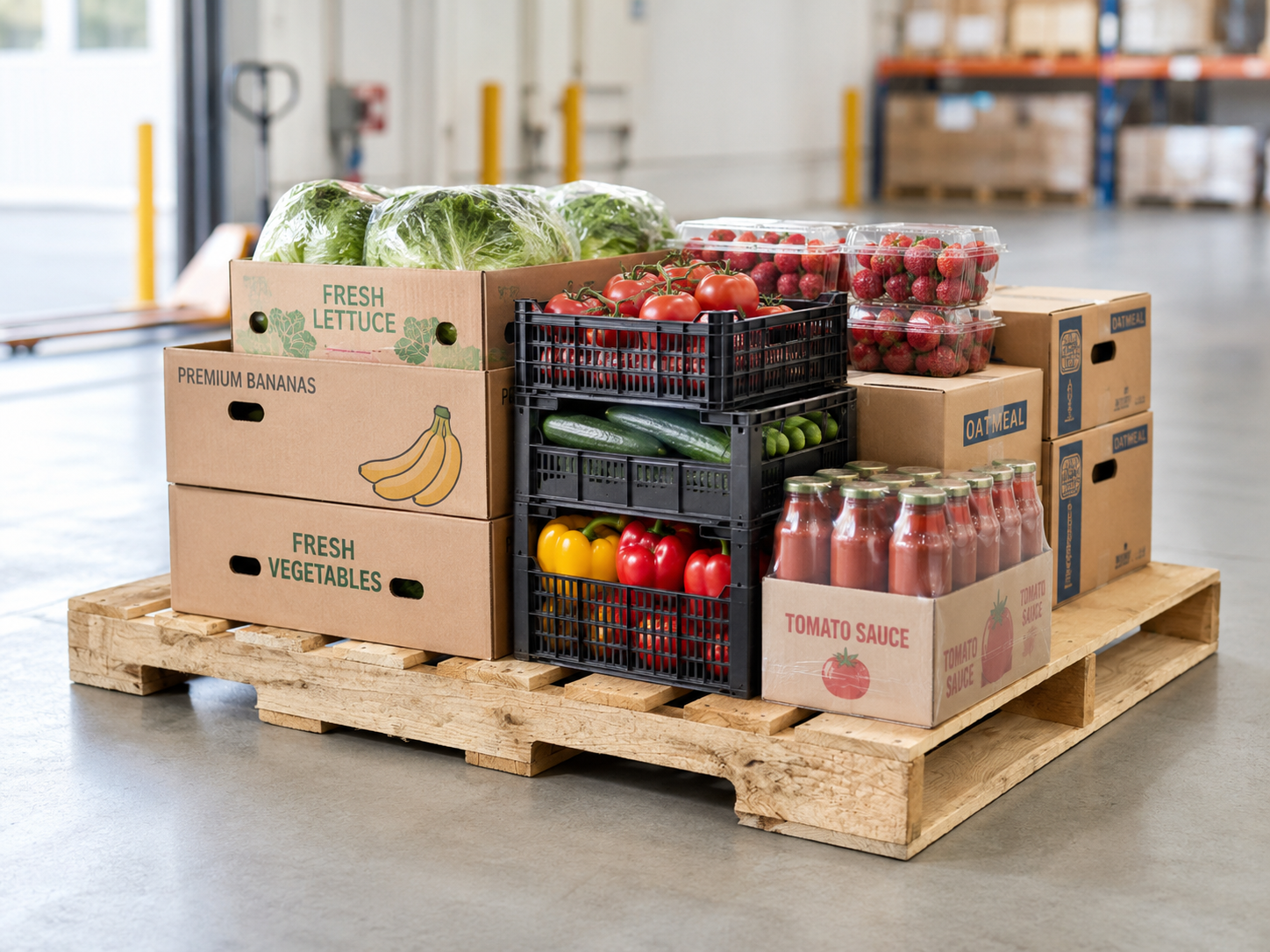
Clean pallets matter when the pallet is close to the product, visible to the customer, handled inside a clean warehouse, or used by a food, beverage, medical, printing, packaging, or consumer-goods operation. For Minnesota businesses searching for clean pallets near me, the real question is not just where to buy pallets. It is what condition, grade, and pallet type will pass through your operation without creating rejection risk, product damage, sanitation concerns, or wasted dock time.
Gruber Pallets supplies new, recycled, custom, GMA-style, and heat-treated pallets from our Lake Elmo facility for businesses across Minneapolis, St. Paul and the Twin Cities, with delivery booked online within 50 miles and quoted by hand farther out. With over 40 years of pallet experience, we help buyers separate a practical pallet requirement from vague wording like “clean,” “food grade,” or “like new.” That distinction matters because a pallet that works for one warehouse may be unacceptable in another.
What Clean Pallets Really Means
“Clean pallets” usually means pallets that are dry, structurally sound, free of obvious contamination, and appropriate for the product or facility where they will be used. The exact standard depends on the buyer. A packaging company may care about dust and splinters. A food manufacturer may care about odor, residue, staining, moisture, and customer audit requirements. A medical or consumer-goods distributor may need a more consistent pallet appearance because the pallet moves through cleaner storage areas or customer-facing supply chains.
Clean does not always mean brand new, but it does mean the pallet has to match the risk of the application. A pallet used for outdoor scrap collection should not be evaluated the same way as a pallet used under boxed food ingredients, labels, packaging, or finished goods.
Food Grade Is Not One Simple Label
Many buyers ask for food grade pallets, but the term can be misleading. In wood pallets, “food grade” is not a single universal certification that automatically applies to every pallet. It is usually shorthand for a pallet condition requirement: clean, dry, structurally reliable, and acceptable under the buyer’s internal quality or customer requirements.
For food and beverage operations, the safest starting point is to ask what the pallet will touch. Is the product exposed, boxed, bagged, wrapped, or already on a slip sheet? Will the pallet stay inside the facility, ship to a customer, move through a third-party warehouse, or cross an international border? Those answers affect whether a new pallet, a Grade A recycled pallet, a custom pallet, or a heat-treated pallet makes the most sense.
New Pallets for the Cleanest Applications
New wood pallets are usually the best fit when consistency and appearance matter. Because they are built from fresh material to a defined specification, they are easier to control for dimensions, deck spacing, board quality, fastener placement, and overall condition. New pallets are often the better choice for food producers, co-packers, medical device suppliers, printers, packaging suppliers, and high-value products where variation creates risk.
New pallets also make sense when your customer has written pallet standards. If a receiver rejects loads for broken boards, dirt, excessive wear, odor, or inconsistent pallet condition, the cheapest pallet can become expensive quickly. Product rejection, rework, emergency re-shipping, and customer frustration cost more than the difference between a weak pallet match and the right pallet specification.
Grade A Recycled Pallets for Cost Control
Recycled pallets can be a strong option when the application allows used pallets but still requires a cleaner, more consistent grade. Grade A recycled pallets are typically the cleanest and most uniform recycled option. They are commonly used for warehouse storage, secondary packaging, one-way shipping, and operations where standard 48x40 pallets work well but new pallets are not required.
The key is being honest about where the pallet will go. A Grade A recycled pallet may be perfectly practical for boxed goods moving through a warehouse, while a new pallet may be the better fit for sensitive packaging, customer-facing shipments, or facilities with stricter quality documentation. Gruber Pallets can help you compare the options before you overpay or under-spec the pallet.
GMA-Style Pallets and Clean Warehouse Flow
Many clean pallet requests are also 48x40 pallet requests. A GMA-style pallet is common in grocery, food, beverage, retail, and distribution environments because the footprint works with standard warehouse systems. But the footprint alone does not define cleanliness. A 48x40 pallet can be new, recycled, heat-treated, Grade A, Grade B, repaired, weathered, or custom built around a specific load.
If your operation uses racking, automation, pallet jacks, stretch wrap, or customer return systems, pallet consistency matters. Clean pallets should also be practical pallets. They need to move through the facility without catching, leaning, breaking, contaminating product, or slowing down forklift and dock work.
Heat Treatment Is Different From Cleanliness
Heat-treated pallets are required for many international shipments under ISPM-15. Heat treatment helps meet export requirements by heating wood to the required core temperature, but it should not be confused with a broad cleanliness promise. A heat-treated pallet can still need to meet your facility’s condition, storage, dryness, and appearance requirements.
If your shipment is leaving the United States, ask for heat-treated pallets early. If the same shipment also requires clean or customer-approved pallets, communicate both requirements. “Heat treated” and “clean enough for this customer” are related only when your specification says they are.
Questions to Answer Before Ordering
A clean pallet order is easier to quote correctly when the supplier knows the real use case. Before requesting pricing, gather these details:
- Pallet size, such as 48x40 GMA or a custom footprint
- New, Grade A recycled, heat-treated, or custom preference
- Product type and whether the pallet touches primary packaging, secondary packaging, or wrapped finished goods
- Customer, carrier, audit, export, or internal quality requirements
- Load weight and whether pallets will be racked, stacked, or handled by automation
- Quantity, recurring volume, delivery location, and receiving hours
- Any restrictions around staining, odor, moisture, repairs, broken boards, or mixed pallet grades
Those details prevent vague buying. They also help Gruber Pallets recommend the lowest practical pallet grade that still protects the product, the customer relationship, and the people handling the load.
When to Use a Quote Request
If your team needs clean pallets in Minneapolis, St. Paul, the Twin Cities, or anywhere in Minnesota, start with the application rather than the label. Tell us what you ship, where it goes, what your customer expects, and whether the pallet needs to be new, recycled, heat-treated, GMA-style, or custom built.
Need clean pallets for food, packaging, warehouse, or customer-facing shipments? Use the Gruber Pallets quote form or call (651) 436-1912. We will help you match the pallet to the job before it becomes a rejection, safety, or delivery problem.
Clean Pallet FAQs
What are clean pallets?
Clean pallets are pallets selected for an application where dirt, residue, odor, staining, moisture, broken boards, protruding fasteners, or previous contamination could create product, safety, or customer-acceptance problems. For many Minnesota businesses, that means new pallets or carefully inspected Grade A recycled pallets.
Are wood pallets considered food grade?
Wood pallets can be suitable for many food-related operations when they are clean, dry, structurally sound, and matched to the facility requirement. However, “food grade” is not a single universal pallet certification. Buyers should confirm their customer, auditor, carrier, or internal quality requirements before ordering.
Should food companies use new or recycled pallets?
New pallets are usually the safest choice when a food manufacturer or co-packer needs clean, consistent, specification-controlled pallets. Grade A recycled pallets can work for some secondary packaging, storage, or one-way shipments when the pallet condition meets the facility standard.
Do clean pallets need heat treatment?
Heat treatment is required for many international shipments under ISPM-15, but it is not the same thing as cleanliness. A pallet can be heat treated and still need to meet a buyer’s cleanliness, dryness, and condition requirements.
What should I ask before ordering clean pallets?
Ask about pallet size, new versus recycled options, Grade A availability, moisture or storage concerns, heat-treatment needs, delivery timing, receiving requirements, and whether your customer has written pallet standards.
Can Gruber Pallets supply clean pallets in Minnesota?
Yes. Gruber Pallets supplies new, recycled, custom, GMA-style, and heat-treated wood pallets from Lake Elmo for businesses across Minneapolis, St. Paul, the Twin Cities, and Minnesota. The right clean pallet option depends on the application and required condition.