
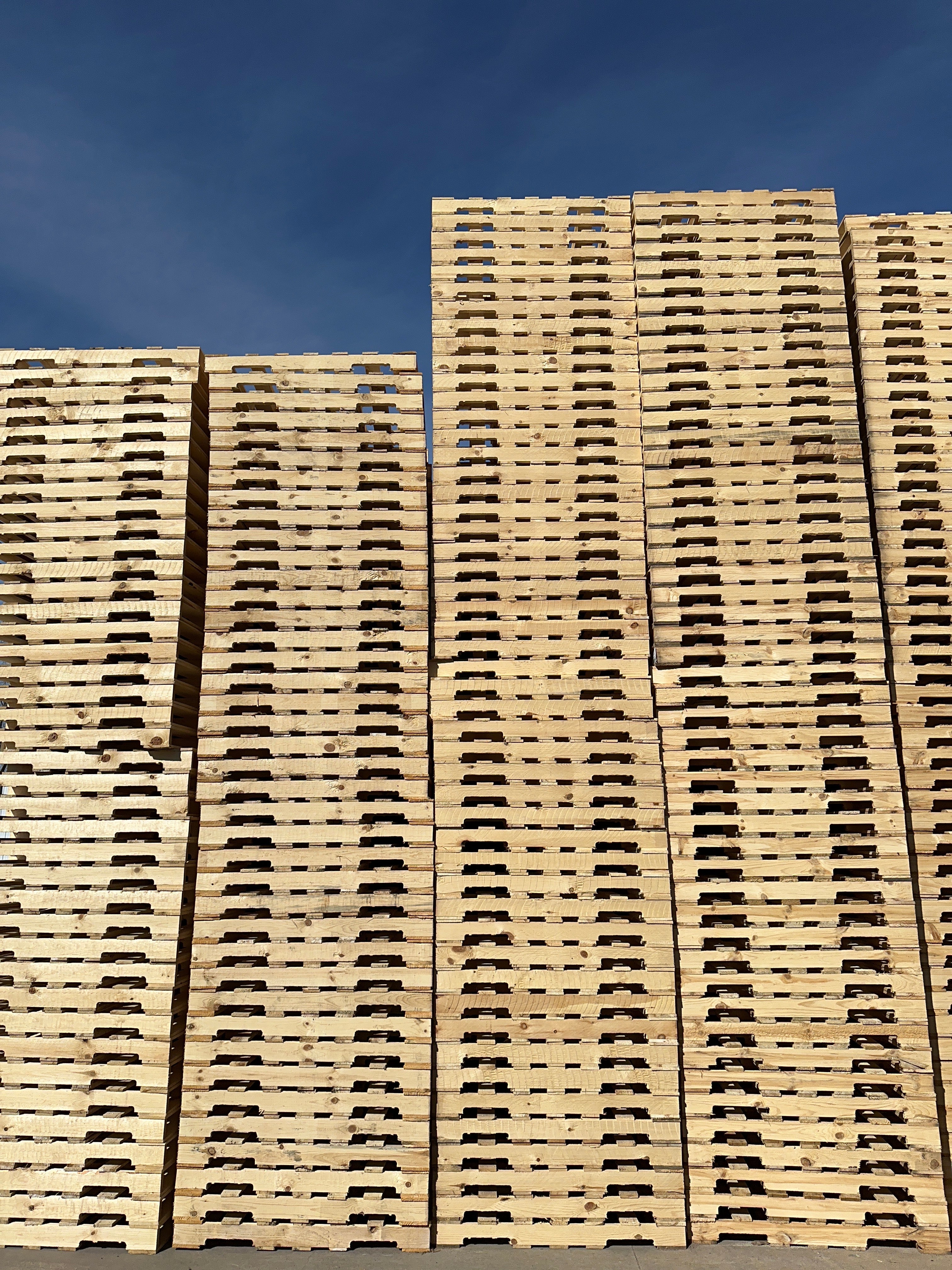
Bulk wood pallet orders are different from buying a few pallets at a time. When a Minnesota warehouse, manufacturer, food producer, printer, distributor, or fulfillment operation needs pallets by the dozens, hundreds, or thousands, the real question is not just "what does a pallet cost?" The better question is: what pallet program will keep your operation supplied without creating delivery surprises, quality issues, or wasted handling time?
Gruber Pallets works with businesses across Minneapolis, St. Paul and the east metro that need dependable pallet supply, and quotes delivery farther out by hand. With over 40 years of industry experience from our Lake Elmo facility, we help buyers think through quantity, grade, pallet type, timing, and delivery before the order turns into an emergency.
Start With the Real Use Case
Before placing a bulk pallet order, identify what the pallet must do inside your operation. A pallet used once for outbound shipping has a different job than a pallet that will cycle through racking, return from customers, or support heavy product in storage. The same 48x40 footprint can perform very differently depending on board thickness, stringer quality, deck spacing, fasteners, and whether the pallet is new, recycled, remanufactured, or custom built.
If your team is ordering pallets because the last batch failed, the cheapest visible option may not be the lowest-cost option. Broken pallets create product damage, rework, safety risk, shipping delays, and frustration for the people handling them. A stronger pallet specification can often reduce total waste even when the line-item price is higher.
Choose the Right Pallet Type
New pallets
New wood pallets are usually the right fit when consistency matters. If you need clean lumber, exact dimensions, repeatable performance, or pallets built around a product, a new pallet program gives you more control. New pallets are also common for food, medical, export, automated, and high-value product environments where variation creates downstream problems.
Recycled pallets
Recycled pallets are often the best option when standard sizes work and cost control is a major factor. Many Minnesota businesses use recycled 48x40 pallets for everyday warehouse and shipping needs. The key is matching the grade to the job. A Grade A recycled pallet may make sense for cleaner or heavier use, while a lower grade can work for basic one-way shipments.
Custom pallets
Custom pallets are worth discussing when your product does not fit a standard footprint, when overhang is damaging goods, or when freight efficiency matters. A custom pallet can solve a recurring operational problem instead of forcing your team to work around it every week.
Heat-treated pallets
If your pallets will cross international borders, ask for heat-treated pallets. ISPM-15 export requirements are not something to handle at the last minute. For bulk orders, confirming heat-treatment needs early helps avoid delays when a shipment is ready but compliant pallets are not.
Know the Ordering Details That Matter
The fastest way to get a useful quote is to provide the details a pallet supplier needs to plan production, sorting, and delivery. A good bulk pallet request should include:
- Pallet size, such as 48x40 GMA, 48x42, 36x36, or a custom size
- New, recycled, remanufactured, custom, or heat-treated preference
- Approximate quantity for the first order and expected recurring volume
- Load weight and whether the pallet will be racked, stacked, or shipped one way
- Delivery location, receiving hours, dock access, and forklift availability
- Cleanliness, grade, export, or industry requirements
- Timing: urgent one-time need, weekly supply, monthly supply, or seasonal spikes
That information helps prevent under-specifying the pallet, overpaying for a pallet you do not need, or losing time in back-and-forth emails while your operation is waiting.
Plan Around Delivery, Not Just Price
For bulk pallet orders, delivery reliability can matter as much as pallet price. A low quote does not help if the pallets arrive late, arrive in the wrong grade, or show up when your receiving team cannot unload them. Businesses in Minneapolis-St. Paul often need pallet deliveries coordinated around dock schedules, production shifts, route timing, and storage space.
If your facility does not have room to store a large safety stock, a recurring order rhythm may be better than occasional emergency purchases. If your demand spikes seasonally, it is better to discuss that before the busy period starts. Pallets are physical, bulky, and tied to lumber availability, labor, trucking, and sorting capacity. Planning early beats scrambling late.
Use Bulk Orders to Reduce Waste
Bulk pallet ordering should not be only a purchasing exercise. It is also a process-improvement opportunity. If your company is dealing with broken pallets, inconsistent sizes, excess scrap, messy storage areas, or last-minute buying, the pallet program itself may be creating waste.
A better approach is to look at the full flow: how pallets enter the building, where they are stored, how they are used, how damaged pallets are handled, and whether usable pallets can be recycled back into the system. Gruber Pallets can also help with pallet disposal and recycling when empty or damaged pallets are building up and taking space away from production.
When to Request a Quote
Request a quote as soon as you know a bulk pallet need is coming, especially if the order involves custom dimensions, heat treatment, tight delivery windows, or a new recurring program. If you already have a pallet specification, send it. If you do not, describe the product, weight, handling process, and shipping requirements so the right recommendation can be made.
For Minnesota businesses, the best pallet supplier is not simply the one that can sell a pallet today. It is the one that can help you keep pallets from becoming the reason your shipping, receiving, or production flow slows down.
Need bulk pallets in Minnesota? Start with the Gruber Pallets quote form or call (651) 436-1912. Tell us what you ship, how many pallets you need, where they are going, and whether this is a one-time order or a recurring supply need.
Bulk Pallet Order FAQs
What is considered a bulk pallet order?
A bulk pallet order is usually an order large enough to affect production planning, delivery scheduling, or volume pricing. For Minnesota businesses, that may mean a recurring weekly order, a one-time warehouse restock, or a custom run built to a specific pallet specification.
Can Gruber Pallets handle recurring pallet orders?
Yes. Gruber Pallets can support recurring pallet orders for Twin Cities and Minnesota businesses that need reliable new, recycled, custom, or heat-treated pallets. The best setup depends on pallet size, quantity, grade, delivery location, and timing.
What details should I include when requesting bulk pallets?
Include pallet size, new or recycled preference, quantity, delivery address, receiving hours, forklift or dock availability, heat-treatment needs, and whether the order is one-time or recurring.
Are bulk pallet orders cheaper than small orders?
Bulk pallet orders can qualify for better per-pallet economics because production, sorting, staging, and delivery can be planned more efficiently. Final pricing depends on size, lumber market conditions, grade, quantity, and delivery requirements.
Can bulk pallet orders include heat-treated pallets?
Yes. If your business ships internationally, ask for ISPM-15 heat-treated pallets and confirm that the pallets need to be stamped for export. Gruber Pallets supplies heat-treated pallet options for Minnesota businesses.
Can Minneapolis businesses buy bulk pallets from Gruber Pallets?
Yes. Gruber Pallets supplies bulk pallet orders for Minneapolis businesses from its Lake Elmo facility, including new wood pallets, recycled pallets, custom pallets, heat-treated pallets, and recurring pallet supply programs for warehouses, manufacturers, and distributors.
Related pallet resources
For Minneapolis-area recurring pallet needs, see our Minneapolis pallet supplier page and Minneapolis pallet delivery details.