
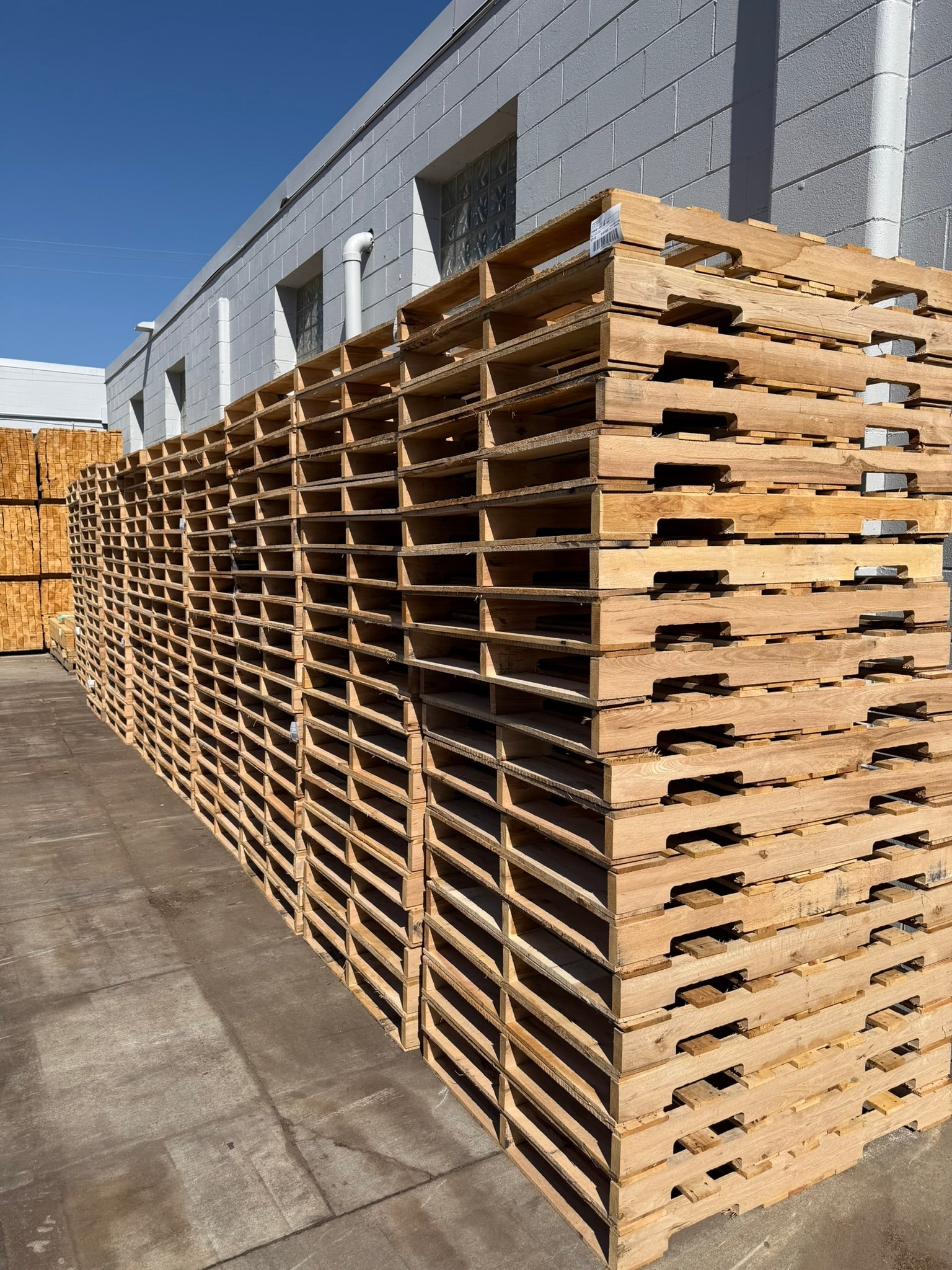
Minnesota businesses searching for pallet storage and delivery are usually trying to solve a bigger problem than one pallet order. They need the right pallets available when production, warehousing, or shipping needs them, without filling their dock with excess inventory or scrambling when the last stack is gone.
That is where a practical pallet program helps. Gruber Pallets supplies new, recycled, custom, GMA, and heat-treated pallets from Lake Elmo to businesses across Minneapolis, St. Paul and the Twin Cities metro, with delivery booked online within 50 miles and quoted by hand farther out. With over 40 years of industry experience, our team has seen the same issue many times: pallet cost matters, but pallet flow matters just as much.
What Pallet Storage & Delivery Solves
A pallet is only useful if it is available, in the right condition, and at the right place. When those three things break down, businesses lose time in receiving, shipping, production staging, and warehouse movement.
A coordinated pallet storage and delivery plan helps answer four operational questions:
- How many pallets does your business need each week or month?
- Which pallet grades or sizes should be kept available?
- When should pallets be delivered so they support production instead of blocking space?
- What should happen to empty, broken, or recoverable pallets after use?
For many operations, the best answer is not one huge order or a random spot purchase. It is a supply rhythm that matches actual pallet usage.
Signs You Need a Better Pallet Program
If pallets are creating daily friction, the issue is usually visible before it becomes expensive. Watch for these patterns:
- Stacks of pallets taking up dock, yard, or warehouse space.
- Emergency buying because inventory ran lower than expected.
- Mixed pallet quality causing rejected loads or product damage risk.
- Too many broken pallets waiting for removal.
- Different departments buying pallets independently with no clear standard.
Those problems are not just housekeeping issues. They create handling waste, increase the chance of shipping delays, and make it harder to know your true pallet cost.
How Scheduled Pallet Delivery Works
Scheduled pallet delivery starts with the use case. A food producer, printer, manufacturer, or distributor may all use 48x40 pallets, but their requirements can differ sharply. Some need clean new pallets for customer-facing shipments. Others need dependable recycled pallets for internal movement. Export shippers may need heat-treated, ISPM-15 compliant pallets.
Gruber Pallets can help Minnesota buyers sort that decision before the order is placed. Common options include new wood pallets, recycled wood pallets, GMA pallets, heat-treated pallets, and custom pallet sizes.
Once the pallet type and volume are clear, delivery can be planned around your location, receiving hours, dock access, quantity, and urgency. For many Twin Cities businesses, that means recurring delivery from our Lake Elmo facility along practical metro routes serving Minneapolis, St. Paul, Woodbury, Maplewood, Oakdale, Eagan, Bloomington, Brooklyn Park, Plymouth, and surrounding industrial corridors.
For delivery-specific details, see our Pallet Delivery Minneapolis page.
Adding Pickup, Recycling, or Buyback
A strong pallet program does not stop when the pallet arrives. If your business receives freight, ships outbound loads, or cycles pallets internally, used and broken pallets eventually become part of the workflow.
Depending on volume and condition, Gruber Pallets may be able to help with pallet pickup, sorting, repair, reconditioning, recycling, or buyback. Recoverable pallets can often be repaired or returned to service. Damaged pallets that cannot be reused may still be recycled instead of sent to a landfill.
This matters because pallet disposal, supply, and cost are connected. A business that buys pallets in one channel and deals with broken pallets somewhere else may miss chances to reduce waste or recover value. Our pallet recycling, pallet disposal, and we buy pallets pages explain those options in more detail.
Local Supplier vs. Generic Ordering
National catalogs can work for one-time purchases, but they do not always solve the operational problem. Pallets are bulky, heavy, and timing-sensitive. Freight cost, lead time, pallet grade, and supplier responsiveness all matter when the pallets affect daily work.
A local pallet supplier can look at the whole pattern: what you buy, how often you need it, what grades make sense, whether delivery should be recurring, and whether pallet pickup or recycling belongs in the same conversation.
That is especially important for lean operations. Carrying too many pallets wastes space and cash. Carrying too few creates production risk. The right target is enough supply to keep work moving, without turning your dock into storage.
What to Prepare Before Requesting a Quote
The fastest way to build the right pallet program is to share useful details up front. Before contacting a supplier, gather:
- Pallet size, such as 48x40 GMA or a custom dimension.
- Monthly or weekly pallet usage.
- Preferred grade: new, recycled, reconditioned, heat-treated, or custom.
- Delivery address, receiving hours, and dock requirements.
- Whether you need pickup, recycling, removal, or buyback for used pallets.
- Any product, food, export, racking, or handling requirements.
If you are unsure, that is fine. A good pallet supplier should help you choose the right grade and program rather than simply selling the highest-cost option.
FAQ: Pallet Storage & Delivery
What is a pallet storage and delivery program?
A pallet storage and delivery program is a recurring supply arrangement where pallets are staged, delivered, and replenished based on your usage so your operation does not run out or overfill warehouse space.
Can Gruber Pallets deliver pallets on a schedule?
Yes. Gruber Pallets delivers new, recycled, custom, and heat-treated pallets across Minneapolis, St. Paul and the Twin Cities metro. Delivery within 50 miles of Lake Elmo books online; farther out, to about 170 miles, we quote it by hand. Scheduling depends on pallet type, quantity, location, and current inventory.
Can pallet pickup and recycling be part of the same program?
Often, yes. If your business produces recoverable used pallets or broken pallets, pickup, sorting, repair, recycling, or buyback may be coordinated with your pallet supply needs.
Who benefits most from a pallet management program?
Manufacturers, warehouses, food producers, distributors, printers, and other high-volume operations benefit most because pallet shortages, excess dock clutter, and inconsistent quality can interrupt daily workflow.
How do I start a pallet delivery program in Minnesota?
Start by sharing your pallet size, grade, monthly volume, delivery location, dock requirements, and whether you also need pickup or recycling. Gruber Pallets can use that information to recommend a practical program.
Build a Pallet Program That Fits
If your business needs pallet storage, scheduled delivery, pickup, recycling, or a more reliable recurring supply plan, start with a practical conversation. Tell us what you use today, where pallets are causing friction, and what needs to improve.
Request a pallet quote or call Gruber Pallets at (651) 436-1912. We will help you choose the right pallet type, quantity, and delivery rhythm for your Minnesota operation.